Simply the art of “fuxico” is considered to be Brazilian, but unfortunately there is nothing registered as far as I researched. Rumours are that this handcrafting technique started in Brazil dated back to slavery. The word “fuxico” (read fushico!) is a Brazilian word for gossiping.
Slaves were brought to Brazil by Europeans. It was a harsh period of the Brazilian colonisation. Slaves dreamed badly for their freedom, yet they would have to work harder under poorly working conditions to pursue it. Men would practice quietly capoeira to get ready for fighting for their rights and women would use their crafting talents.
When darkness fell into the “senzalas” – camp of slaves – women would gather in their shelter for sewing an infinite of round cut-out-pieces from the finest fabrics of the glamorous second-hand dresses they were given.
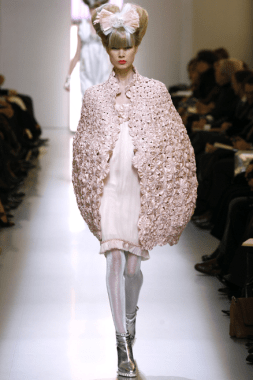
Despite the black history here involved, this wonderful fuxico technique seemed to conquer the most fabulous fashion couture catwalks.
Karl Lagerfeld for Chanel…
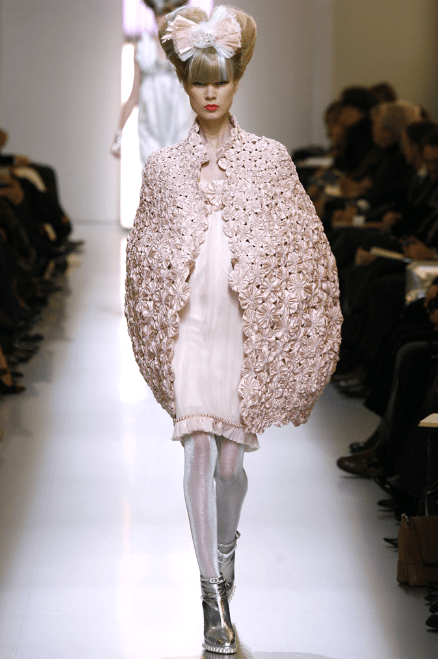
… Carlos Miele.
The Brazilian designer Carlos Miele for the collection SS/08 partnered with women-artisans living in the “favela” Rocinha – Coopa-Roca. This cooperative supports women in the community to get their subsistence from their crafting work.
and Tania Santana…
The Brazilian born-in-Bahia is a gifted artisan, talented designer I met in Houten, a Dutch town near Utrecht.
We all somehow learned from our grandmothers to make fuxico pieces. Nevertheless, the gift of crafting and embellishing these couture collections are not for everyone.
She gave me a workshop to remind me how to put it together. Well, while she made a necklace I was still trying my first single pieces.
This necklace is unique, she finely crafted for me.
This is part of a limited collection, but you can order your style.




 CLAUDIA FALCÃO
You must be logged in to post a comment.